Residential Pest Control Toronto

Get professional residential pest control in Toronto and across the Greater Toronto Area. GTA Pest Solutions helps homeowners, renters, and condo residents identify pest problems, treat infestations, and prevent recurring issues with practical, property-specific solutions.

    Get Your Quote

    Residential Pest Control In Toronto

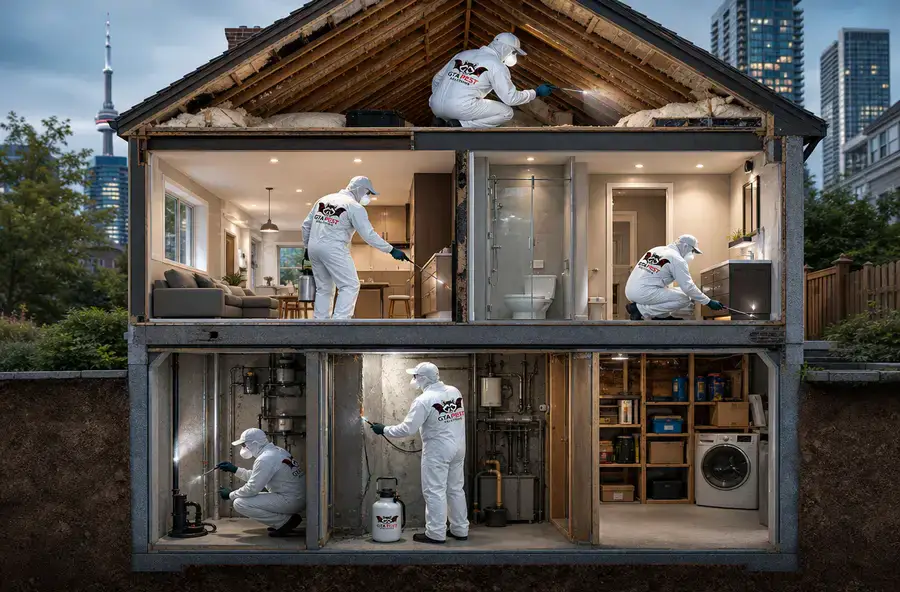
    Signs of a pest infestation inside a residential home

    Residential Pest Control in Toronto, Explained

    Residential pest control in Toronto helps homeowners, renters, and condo residents identify, treat, and prevent common household pests. GTA Pest Solutions provides inspection-led pest management for houses, apartments, townhomes, and condos across the GTA. Treatment recommendations depend on the pest, the property, the extent of the infestation, and the conditions that allow pests to enter or survive.

    Professional pest control is not simply about spraying visible insects. A complete treatment may involve identifying the pest, locating harbourage areas, treating appropriate areas, addressing entry points, and recommending practical prevention steps. The goal is to address the current problem while reducing the chance of recurring activity.

    Common Household Pests We Treat in Toronto and the GTA

    Our home pest control Toronto service covers the full range of household invaders:

    01

    Crawling insects

    cockroaches, ants (including carpenter ants), spiders, silverfish, centipedes, earwigs, sowbugs, and carpet beetles.

    02

    Rodents

    mice and rats, plus entry-point sealing so they can't return.

    03

    Biting pests

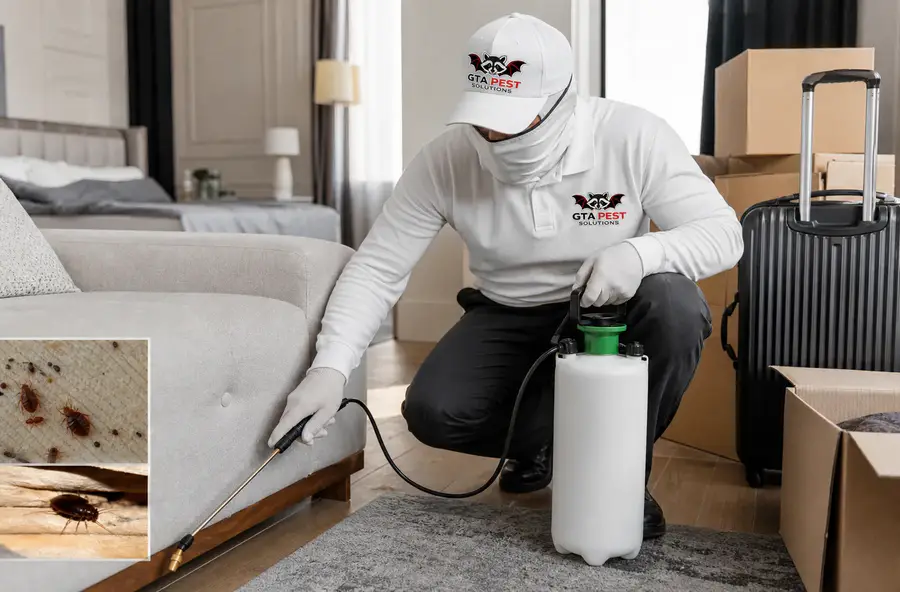
    bed bugs, fleas, and ticks.

    04

    Stinging insects

    wasps, hornets, and bees, including nest removal from soffits, decks, and sheds.

    05

    Wildlife

    raccoons, squirrels, skunks, and birds are handled through our humane wildlife removal service, which uses exclusion rather than extermination.

    Seasonal Pest Control in Toronto: What to Watch For

    Pest activity in the Greater Toronto Area changes throughout the year. Warmer weather can increase insect activity, while cooler temperatures may encourage rodents and other pests to seek shelter indoors. Understanding seasonal patterns can help homeowners identify early warning signs and take preventive action.

    SeasonWhat Becomes ActiveWhat to Watch For
    Spring (Mar–May)Ants, carpenter ants, wasp queens, raccoons, squirrelsAnt trails in kitchens; scratching in attics
    Summer (Jun–Aug)Wasps, hornets, spiders, fleas, mosquitoes, cockroachesNests at full size; cockroach activity increases
    Fall (Sep–Nov)Mice, rats, spiders, boxelder bugs, cluster fliesRodents moving indoors; peak entry season
    Winter (Dec–Feb)Mice, rats, cockroaches, bed bugsIndoor populations breeding in heated spaces

    Residential Pest Control for Different Property Types

    Every home has different pest risks and access points. A detached house may require attention to foundations, garages, attics, and exterior gaps, while a condo or townhouse may involve shared walls, neighbouring units, or building-wide pest activity. GTA Pest Solutions assesses the property and recommends treatment steps based on the pest problem and the building’s conditions.

    PROPERTY TYPES

    How treatment changes by property

    Detached & Semi-Detached Houses

    The widest range of entry points.

    Foundation cracks, utility penetrations, garage gaps, roof vents, and chimneys can all provide access. Treatment focuses on a full exterior perimeter plus interior harbourage points. Older homes in Toronto, Scarborough, and Etobicoke often have gaps that newer builds don't.
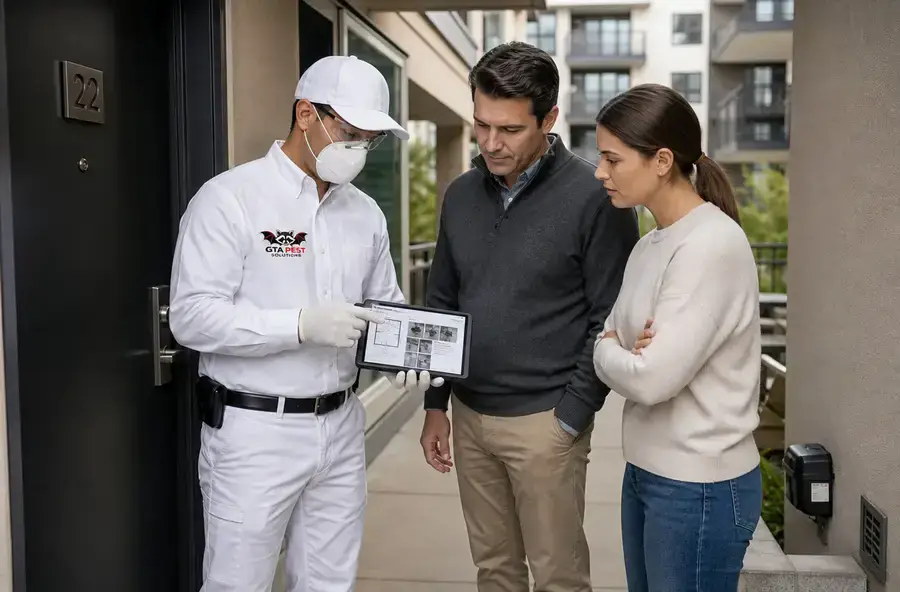
    Condos & High-Rise Apartments

    Pests can travel between units through shared building pathways.

    Pests travel between units through wall voids, plumbing chases, and shared garbage rooms. Treating one unit alone rarely holds. We work with residents and property managers to treat adjacent units where needed, and we coordinate access discreetly.

    Townhouses & Row Homes

    Shared walls mean shared problems.

    Shared walls mean shared problems, especially for mice and cockroaches. Attic spaces are sometimes continuous between units, which matters for wildlife.

    Shared walls

    Basement Apartments

    Moisture and ground-level entry make these especially vulnerable.

    Moisture and ground-level entry make these vulnerable to cockroaches, silverfish, centipedes, and rodents. Drainage and grading fixes often matter more than the treatment itself.

    Ground-level entry

    What to Expect During a Residential Pest Control Visit

    A residential pest control visit typically begins with an assessment of the pest problem and the property. The technician identifies signs of activity, discusses the treatment plan, and explains any preparation or follow-up requirements before work begins.

    Inspection (30–60 minutes)

    The technician assesses relevant interior and exterior areas, looking for pest activity, harbourage locations, entry points, and conditions that may contribute to the infestation.

    Explanation and quote

    You receive an explanation of the findings, the recommended treatment approach, and the expected service requirements. Confirm pricing and any applicable guarantee terms before treatment begins.

    Treatment

    Treatment is selected according to the pest, property, and infestation. The technician explains the areas being treated and any precautions that apply.

    Prep and re-entry guidance

    Most treatments require you to be out for a short period. Your technician gives exact timing before starting, so you can plan around it.

    Sealing and prevention

    The technician explains relevant prevention measures and whether additional visits or follow-up treatment may be needed.

    When to Use DIY Pest Control and When to Call a Professional

    Minor pest activity can sometimes be addressed through cleaning, food storage, removing standing water, or sealing small gaps. However, recurring infestations, rodents inside walls, bed bugs, cockroach activity, and stinging insect nests may require professional assessment and treatment.

    Technician inspecting a home for pest entry points
    01

    DIY Is Usually Enough For

    A handful of ants after a spill, a single spider, occasional cluster flies at a window, or one wasp that flew in an open door. Sealing a food container or caulking a gap solves most of these.

    02

    Call a Residential Exterminator Toronto When

    You see droppings, hear scratching in walls or ceilings, find a wasp nest, notice bites overnight, or see cockroaches (especially in daylight, which signals a large population) or when the problem returns after you've treated it twice.

    03

    Why DIY Fails on Real Infestations

    Retail sprays kill on contact but don't reach nests inside wall voids. Worse, some products cause cockroaches and bed bugs to scatter into neighbouring rooms or units, turning one problem into several. Rodent baiting without sealing entry points simply invites replacements.

    Tried foggers or sprays already? Let’s start over the right way.

    Pest Control for Ontario Renters and Landlords

    Professional pest treatment in a residential home

    Under Ontario’s Residential Tenancies Act, landlords are generally responsible for maintaining rental properties in a pest-free condition, including paying for professional treatment. Tenants are expected to report problems promptly, allow access, and complete reasonable preparation.

    If you rent: report the issue in writing and keep a copy. Avoid DIY treatment; it can complicate the professional job and, in some cases, affect your standing in a dispute.

    If you’re a landlord or property manager: treating a single unit in a multi-unit building usually fails. We provide documentation suitable for tenant records and can coordinate multi-unit treatment. See our commercial pest control programs for buildings under management.

    General information only, not legal advice. For a specific dispute, contact the Landlord and Tenant Board or a community legal clinic.

    How to Prevent Pest Problems in Your Home

    Professional treatment can address an existing pest problem, but prevention helps reduce the conditions that attract pests or allow them to enter. Regular inspections, good sanitation, moisture control, and sealing potential entry points are practical steps for homeowners.

    1

    Seal the Gaps

    Mice fit through openings the width of a pencil. Check where pipes, cables, and dryer vents enter the wall.

    2

    Fix Moisture First

    Leaking taps, poor basement drainage, and blocked gutters attract cockroaches, silverfish, and centipedes more reliably than crumbs do.

    3

    Manage the Exterior

    Trim branches away from the roof, keep firewood off the ground and away from walls, and clear leaf litter from the foundation.

    4

    Store Food Properly

    Seal containers, and don't leave pet food out overnight. Pet bowls are one of the most commonly overlooked attractants.

    5

    Take Bins Out on Schedule

    Secure lids matter more than people expect, especially for raccoons.

    6

    Inspect What Comes In

    Used furniture, luggage after travel, and cardboard from storage are the usual routes for bed bugs and cockroaches.

    Why Choose GTA Pest Solutions

    Choosing a pest control company involves more than comparing treatment prices. Homeowners should consider the company’s experience, licensing, treatment approach, communication, and service terms. GTA Pest Solutions provides residential pest control services across the GTA with inspection-led recommendations and practical prevention guidance.

    Licensed & insured exterminator

    Every technician is trained and licensed in Ontario. Never a subcontractor.

    10+ years across the GTA

    We know the difference between a Scarborough bungalow's rodent problem and a downtown condo's cockroach issue.

    Pet-safe, eco-friendly

    treatments: Chosen with children, pets, and asthma sufferers in mind.

    Free pest inspection

    With a firm, written quote before any work starts.

    Guaranteed pest control

    If the pest returns within the guarantee period, we return at no charge.

    Same day pest control

    Where available, including evenings and weekends.

    Discreet service

    We understand you may not want the neighbours knowing.

    Residential Pest Control Areas We Serve

    GTA Pest Solutions provides residential pest control services across Toronto and surrounding communities in the Greater Toronto Area. Service availability may vary by location, pest type, and appointment requirements.

    📍 Toronto 📍 Mississauga 📍 Brampton 📍 Vaughan 📍 Markham 📍 Richmond Hill 📍 Scarborough 📍 North York 📍 Etobicoke 📍 Oakville 📍 Burlington 📍 Milton 📍 Ajax 📍 Pickering 📍 Whitby 📍 Oshawa

    Frequently asked questions

    Residential pest control pricing depends on the pest, property size, level of infestation, treatment requirements, and number of visits. GTA Pest Solutions can assess the problem and provide a quote based on the recommended service. Contact the team to discuss your pest issue and request an inspection.

    Treatment time depends on the pest, property, and service requirements. Some minor issues may be addressed in one visit, while larger or recurring infestations may require additional treatment. The technician should explain the expected process and follow-up requirements.

    Yes. Some pest problems can't wait. GTA Pest Solutions offers same day pest control and emergency pest control across much of the Greater Toronto Area, including evenings and weekends where available.

    Yes. GTA Pest Solutions is a licensed and insured exterminator operating in Ontario. Every treatment is carried out by a trained, licensed exterminator following provincial regulations and Integrated Pest Management (IPM) best practices.

    Absolutely. We remove raccoons, squirrels, skunks, and other wildlife using one-way doors and exclusion methods that cause no harm. During baby season, we reunite young with their mothers as required by the Ontario Fish and Wildlife Conservation Act. After removal, we seal entry points so the animals can't return.

    Yes, though we'll usually recommend reporting it to property management first, since building-wide treatment is more effective for cockroaches and bed bugs. If you'd prefer private, discreet treatment of your unit, we can do that too.