
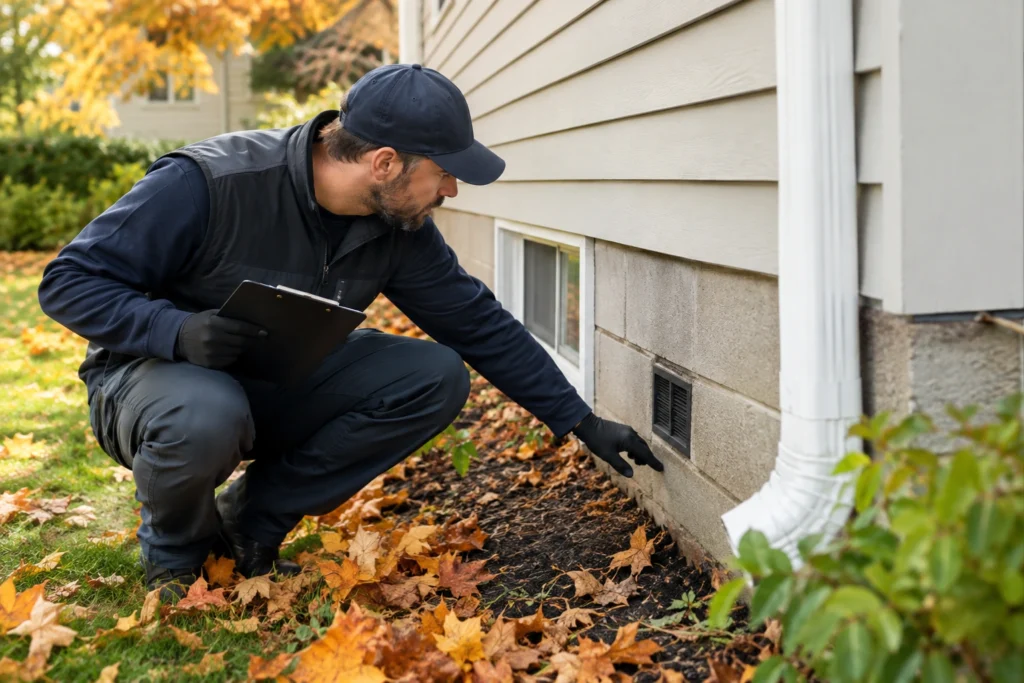
Fall pest prevention Toronto starts with one question: could a pencil fit through that gap? If it can, a mouse can too. This checklist walks your property section by section, with the exact gap sizes and materials that actually stop rodents and wildlife before winter, not general advice about “sealing your home.”
Why Fall Is the Deadline, Not a Suggestion
Mice and rats actively search for indoor shelter as temperatures drop, with entry attempts peaking in late October and November. Whatever gap exists on your property in September is the gap they’ll find in October.
This isn’t a seasonal reminder. It’s a closing window. Every week this checklist waits is a week closer to an established indoor problem instead of a prevented one.
Effective fall pest prevention in Toronto means treating this as a deadline on the calendar, not a task that can slide into November once the weather turns.
The Exact Gap Sizes That Matter
The Quarter-Inch Rule for Mice
A house mouse can squeeze through an opening about a quarter inch wide, roughly the width of a pencil or the size of a dime. This figure is confirmed by both Mississippi State University Extension and NC State Extension, and it holds regardless of the mouse’s apparent size.
The skull is the limiting factor. Once it clears a gap, the rest of the body follows.
What Rats and Squirrels Need
Norway rats need slightly more room, about half an inch, roughly the width of a quarter coin. Squirrels need more still: University of Nebraska Extension confirms squirrels can squeeze through openings as small as 1.5 inches in diameter, and they’ll gnaw a smaller gap wider if it’s close.
See our rodent control page for full mouse and rat identification: gtapestsolutions.ca/rodent-control/
Mini summary: A quarter inch stops mice, half an inch stops rats, and 1.5 inches stops squirrels. Any gap larger than these is a real entry point, not a cosmetic flaw.
Foundation and Exterior Walls
Foundation Checkpoints
Walk the full perimeter of your home at ground level. Run a hand along the base of the foundation rather than just looking, since the gaps that matter are often too small to spot from standing height.
Check every point where a gap size allows a pipe, cable, or wire to enter the building. Look for cracks in masonry, gaps around the sill plate, and any spot where siding has pulled away from the foundation.
What Actually Seals a Gap
Steel wool and copper mesh are the materials that hold up, packed tightly into a gap and secured with a durable sealant. Exclusion using expanding foam alone doesn’t work as a permanent fix, since mice chew through it within a season.
This is where fall pest prevention actually starts for most Toronto homes: the foundation is the single largest surface a rodent can work along undetected.
Mini summary: Foundation gaps are found by touch, not sight. Steel wool and copper mesh seal them permanently; foam alone doesn’t.
Doors and Windows
Door and Window Checkpoints
Close each exterior door and check for visible daylight underneath. If light gets through, so does a mouse. Door sweep wear over time is one of the most commonly overlooked entry points on an otherwise well-sealed home.
Check window sills and frames for gaps where caulking has cracked or pulled away, especially on older wood-frame windows common across GTA housing stock.
Doors and windows are the fastest part of any fall pest prevention Toronto walkthrough, since both checks take well under a minute per opening.
Mini summary: The daylight test under a door takes ten seconds and catches one of the most common entry points on the whole property.
Roofline, Soffits, and Vents
Roofline Checkpoints
Inspect where the roofline meets the walls, along fascia boards and soffits. Squirrels specifically target this zone, since it offers direct attic access.
Check attic vent and gable vent screens for damage or gaps. A vent opening without intact mesh is functionally an open door for squirrels and, in some cases, larger wildlife.
Roofline gaps are the entry points most fall pest prevention checklists skip entirely, simply because they require looking up instead of walking the ground floor.
See our spider control page if fall webbing is also showing up in these same roofline areas: gtapestsolutions.ca/spider-control/
Mini summary: Roofline gaps are squirrel-specific entry points. Damaged vent screens are the most common failure point in this zone.
Utility Penetrations
Utility Penetration Checkpoints
Every pipe, cable, and conduit that passes through an exterior wall creates a gap around its edge. These are consistently among the most-missed entry points because they’re small, numerous, and easy to overlook from a standing distance.
Check around outdoor faucets, dryer vents, and AC line penetrations specifically, since these often have wider gaps than the utility line actually needs.
A thorough fall pest prevention pass treats every one of these penetrations as its own checkpoint rather than glancing at the wall as a whole.
Mini summary: Utility penetrations are small, numerous, and easy to miss. Checking each one individually matters more than a quick visual scan.
Yard and Perimeter
Yard Checkpoints
Clear brush, woodpiles, and dense vegetation away from the foundation. These provide both cover and a staging point for rodents and wildlife working their way toward your home.
Trim tree branches that overhang the roofline, since squirrels use them as a direct bridge to the attic, bypassing ground-level defenses entirely.
The yard is often the last stop on a fall pest prevention Toronto checklist, but it removes two staging points at once when done properly.
See our wildlife removal page if you’re already hearing activity in the attic: gtapestsolutions.ca/wildlife-removal/
Mini summary: Ground clutter and overhanging branches give pests a staging point and a bridge. Clearing both removes two entry paths at once.
Sheds, Garages, and Detached Structures
Detached Structure Checkpoints
Sheds, detached garages, and storage barns are often the first stop, not the house itself. They’re typically easier to enter than a well-sealed home, and they hold exactly the clutter (lawn clippings, cardboard, stored firewood) that gives rodents both shelter and something to nest in.
Apply the same gap-size checks here as the main house: foundation edges, door sweeps, and any vents. A shed that’s easy to get into becomes a staging point a few metres from your actual home, not a separate problem.
Mini summary: A shed or garage that’s easy to enter puts pests a few metres from your house instead of stopping them outright. The same entry-point checks apply here too.
Standing Water and Drainage
Drainage Checkpoints
Standing water left to pool before the freeze attracts mosquitoes and earwigs at exactly the point in the season when they’re most desperate for a last source before winter. Check outdoor faucets, sprinkler lines, and utility mains for leaks or slow drips.
Clear gutters before they clog and overflow along the foundation, since pooled water at ground level directly undermines the foundation sealing work done earlier in this checklist.
Mini summary: Standing water and clogged gutters both undo foundation sealing work if left unchecked. Clear both before the first freeze.
Indoor Food Storage
Pantry Checkpoints
A sealed entry point matters less if the pantry still hands a mouse an easy meal. Cereal boxes, grain bags, and pet food in their original cardboard packaging are exactly what a rodent that does get in will find first.
Transfer dry food into sealed glass or hard plastic containers before entry attempts peak in October. This removes the incentive even if a gap gets missed elsewhere on the property.
Mini summary: Sealed containers remove the food incentive, so even a missed gap is less likely to turn into an established problem.
Ongoing Monitoring Through the Season
What to Watch For After the Walkthrough
This checklist isn’t a single pass you finish and forget. A quick walk around the property every couple of weeks through fall catches anything the initial sealing missed while pressure is still building.
Watch for droppings along walls or behind appliances, chewed cardboard in storage areas, and dead insects collecting on windowsills. Each is an early sign worth acting on before it becomes an established indoor problem.
Mini summary: A one-time seal isn’t the finish line. Biweekly checks through fall catch what the first pass missed before it becomes a bigger problem.
The Full Checklist
| Area | Check For | Seal With |
|---|---|---|
| Foundation | Cracks, gaps around pipes, sill plate gaps | Steel wool, copper mesh |
| Doors | Daylight under door sweeps | New door sweep |
| Windows | Cracked or missing caulk | Fresh exterior caulk |
| Roofline/Soffits | Gaps at fascia, damaged vent screens | Metal mesh, hardware cloth |
| Utility penetrations | Gaps around pipes, cables, vents | Steel wool, sealant |
| Yard | Woodpiles, overhanging branches | Clear brush, trim branches |
| Sheds/Garages | Same entry-point gaps as the house, plus stored clutter | Same materials as house; clear clutter |
| Drainage | Standing water, clogged gutters, leaking faucets | Clear gutters, fix leaks before freeze |
| Pantry | Food in original cardboard packaging | Sealed glass or hard plastic containers |
| Ongoing checks | Droppings, chewed cardboard, dead insects on sills | Biweekly walkaround through fall |
Key Takeaways
- A quarter-inch gap lets a mouse in; half an inch lets a rat in; 1.5 inches lets a squirrel in.
- Steel wool and copper mesh are the materials that actually hold up; expanding foam alone fails within a season.
- The daylight test under exterior doors takes ten seconds and catches one of the most common entry points.
- Utility penetrations and roofline gaps are the two most commonly missed areas on an otherwise sealed property.
- Fall entry attempts peak in late October and November, so this checklist needs to be done before then, not after.
- Fall pest prevention Toronto works best as a single property-wide pass, not a room checked here and there over several weekends.
Frequently Asked Questions
What size gap can a mouse actually fit through?
About a quarter inch, roughly the width of a pencil or the size of a dime. This figure is confirmed by Mississippi State University Extension and holds regardless of the mouse’s visible size.
Is expanding foam good enough to seal a gap?
No, not on its own. Mice can chew through expanding foam within a season. Steel wool or copper mesh packed into the gap first, then sealed, is the durable approach.
How do I check for gaps I can’t easily see?
Run a hand along the base of your foundation rather than relying on a visual check alone. Many entry-point gaps are small enough to miss by sight but easy to feel.
What’s the single most commonly missed entry point?
Utility penetrations, the small gaps around pipes, cables, and vents entering the house, are consistently the most overlooked, simply because there are many of them and each looks minor on its own.
Why do squirrels need a bigger gap than mice, but still get in easily?
Squirrels need about 1.5 inches, larger than a mouse’s quarter inch, but they compensate by being expert climbers and chewers who can widen a smaller gap over time.
Should I seal gaps myself, or is this a job for a professional?
Small, accessible gaps (utility penetrations, door sweeps) are reasonable to handle yourself with the right materials. Foundation-wide inspections and roofline work are worth a professional walkthrough, since missed gaps are the main reason DIY sealing fails.
When exactly should this checklist be done?
Before late October, ahead of the peak fall entry window for mice and rats. Doing it in September gives your sealing work time to hold before pressure increases.
Does this checklist apply to condos and apartments, or just houses?
Ground-floor and lower-unit condos face the same foundation and utility-penetration risks as houses. Higher units are less exposed to ground-level entry but should still check windows and any shared roofline access points.
Conclusion
Fall pest prevention Toronto isn’t complicated, it’s just specific. A quarter inch stops a mouse, steel wool stops a chewer, and a ten-second daylight test under your door catches what a visual walkthrough misses. Working through each section once, before late October, closes the gaps that would otherwise become a winter problem.
If a walkthrough turns up more than you can confidently seal yourself, or if you’d rather have a professional confirm nothing was missed, that’s exactly what a fall inspection is for.
Want a professional set of eyes on this before winter? Book a free inspection and our team will walk your property, find what this checklist might miss, and seal it with materials built to last, not foam that fails by December.



One Response