Professional fly control in Toronto starts with identifying the fly species and locating the breeding or entry source rather than simply treating visible adult flies. GTA Pest Solutions provides residential and commercial fly control across Toronto and the GTA, using inspection, source treatment, sanitation recommendations and targeted control based on the type of fly and property conditions.
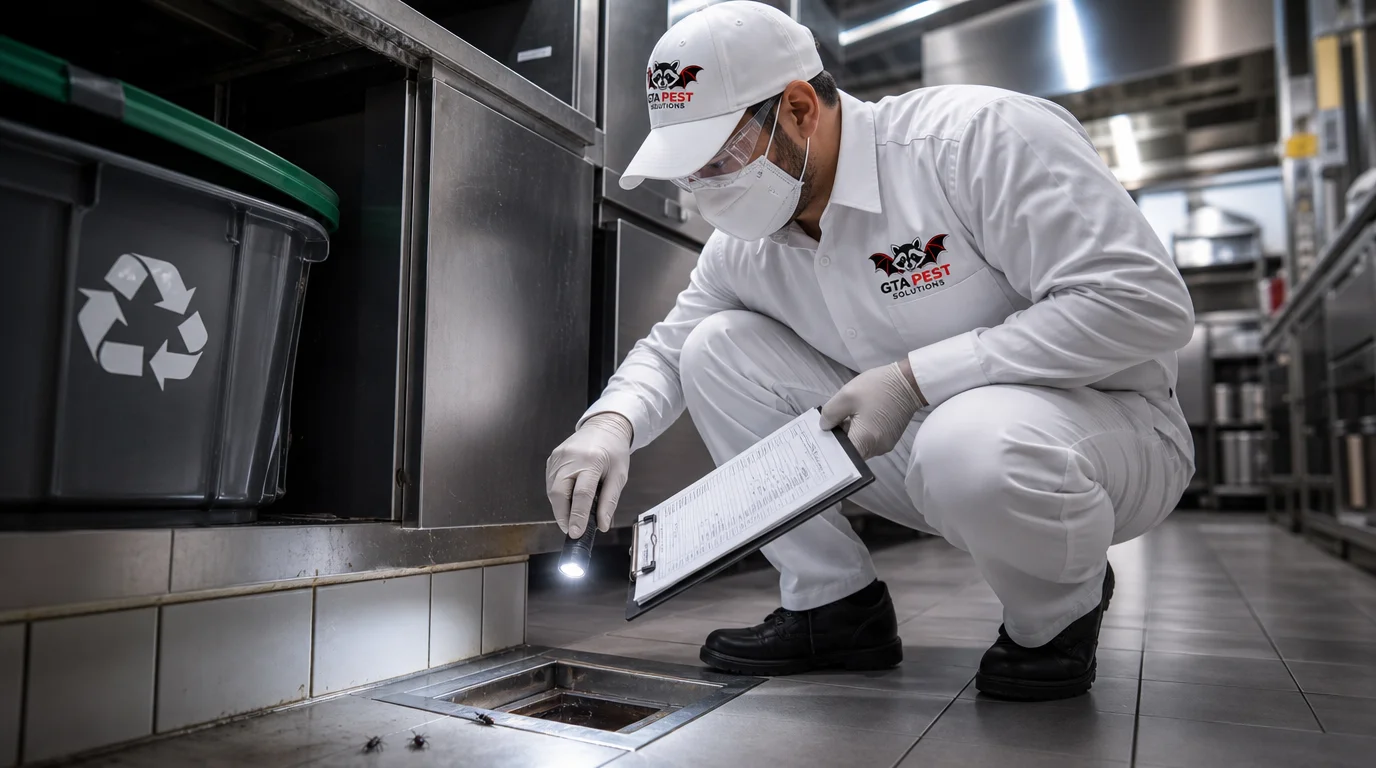
Professional fly control works by identifying the fly, locating where it is breeding or entering the property, and treating the source where possible. This approach is more effective than relying only on sprays or traps because adult flies can continue to appear when the underlying breeding site remains active.
Every job follows Integrated Pest Management (IPM) principles Health Canada promotes for exactly this reason: confirm the species, find the source, treat it directly, then close the door on a repeat visit. Read more about our IPM-based process .
Four species cause almost every fly call in the GTA, and each one needs a different fix. Treating cluster flies in attic spaces calls for a completely different approach than a drain fly or fruit fly problem, since spraying without finding the right source wastes a service visit.
| Type | Where It Breeds | When You See It | What Fixes It |
|---|---|---|---|
| Cluster Fly | Wall voids and attics after migrating from outdoor soil in the fall. | Sunny windows and indoor living spaces during autumn and winter. | Entry-point sealing combined with targeted attic treatment. |
| Drain Fly | Organic sludge inside floor drains, sink drains, and plumbing systems. | Bathrooms, kitchens, utility rooms, and around drains. | Professional drain treatment and improved sanitation. |
| Fruit Fly | Rotting fruit, drink lines, recycling bins, and other fermenting organic material. | Kitchens, bars, restaurants, and produce storage areas. | Remove breeding sources and apply targeted baiting where needed. |
| House Fly | Garbage, manure, and decaying organic matter. | Anywhere food, waste, or organic material is present. | Thorough sanitation combined with commercial fly light units. |
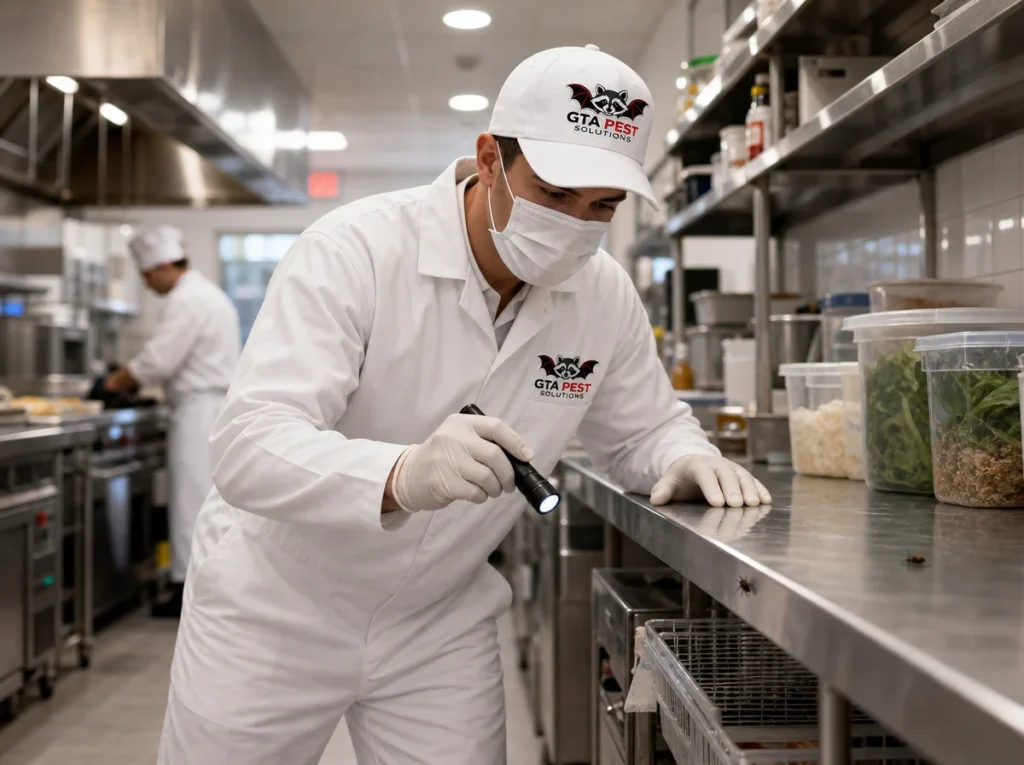
House flies can mechanically transfer microorganisms between contaminated materials and surfaces they contact. This makes fly control particularly important in food-preparation, food-storage and commercial kitchen environments where sanitation and pest management are closely connected.
For businesses, controlling the source of fly activity is therefore both a pest-management and food-hygiene consideration.
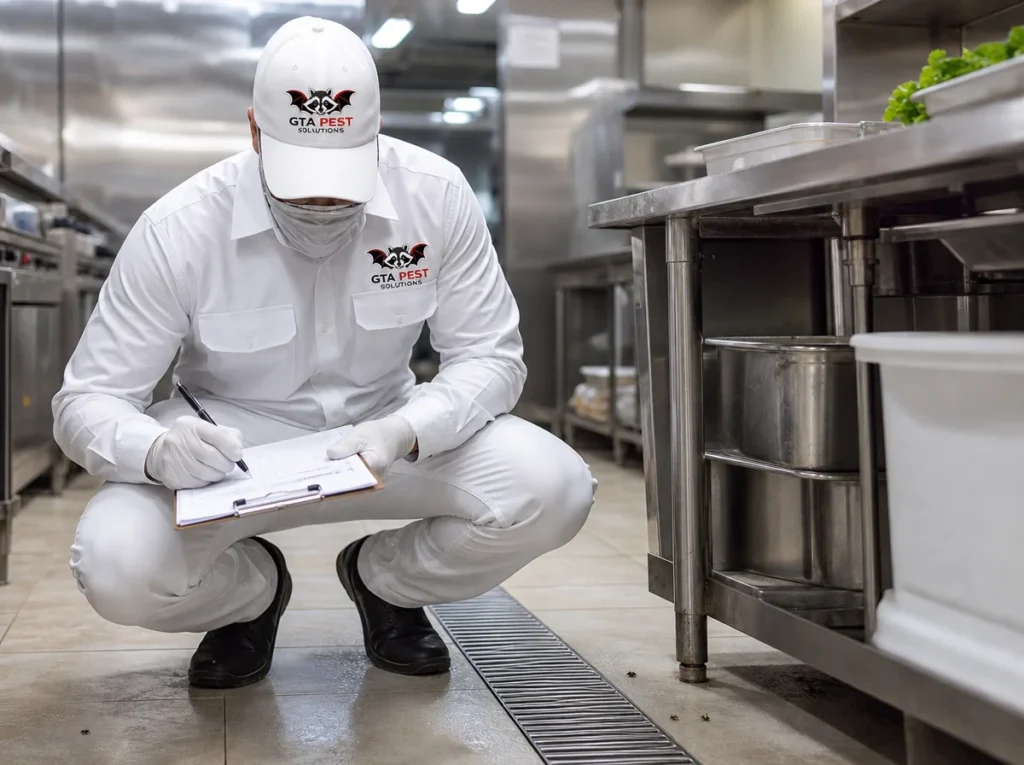
Fly activity can be a concern for Toronto food premises because pest control and sanitation are part of food-premises inspection requirements. Toronto’s DineSafe program uses Ontario’s food-premises requirements when assessing restaurants and other food businesses. Commercial operators should address active fly activity promptly and maintain appropriate pest-control documentation where required.
A drain fly in restaurant settings or a fruit fly in kitchen areas is exactly the kind of finding an inspector documents on the spot, since both point to organic buildup an inspector can see immediately. GTA Pest Solutions documents every commercial visit specifically so operators have a paper trail ready if a follow-up inspection happens.
A professional fly control visit typically begins with species identification and a source inspection. The treatment plan is then selected according to the fly species, breeding conditions, property type and areas requiring treatment.
| Stage | What Happens | Why It Matters |
|---|---|---|
| 🔍 Source Inspection | Drains, wall voids, produce storage, and waste areas are inspected to identify the fly species and locate the breeding source. | ⚠Skipping this step is the leading reason infestations return and repeat visits are needed. |
| 📝 Quote | The pest species is identified, the treatment plan is explained, and a firm price is provided before work begins. | ⚠House fly and cluster fly treatments require different products and control methods. |
| 🛠 Treatment | Drain gel, entry-point sealing, or source removal is carried out based on the identified species. | ⚠Spraying adult flies alone provides only short-term relief if breeding sites remain. |
| 🏢 Commercial Add-on | Fly light units are installed away from entrances, and a detailed service report is provided. | ⚠A service report documents the areas inspected or treated and can be useful for a business maintaining its pest-control records. |
A treated kitchen or yard can still slide back within weeks if the habits that fed the problem don’t change too.
Keep drains clean and free of organic buildup.
Fruit flies find fermentation within a day of it starting.
The same entry points let cluster flies in year after year.
Loose lids are an open invitation for house flies.
Standing water under an appliance keeps a drain fly population going no matter how often you clean the visible surface.
GTA Pest Solutions provides residential and commercial fly control across Toronto and the Greater Toronto Area. Our approach focuses on identifying the fly species, locating the source and selecting treatment based on the property and infestation conditions.
Every technician carries a valid Ontario exterminator licence . No subcontractors, residential or commercial.
Not just surface spraying.
Provided for DineSafe follow-up on every visit.
Not just surface spraying.
Provided for DineSafe follow-up on every visit.
We provide house pest control GTA-wide across:
Plus Peel, York, Halton, and Durham Regions. See all areas we serve across the GTA.
The cost of fly control in Toronto depends on the fly species, property size, whether the service is residential or commercial, the number of breeding sources and the treatment required. A professional inspection can determine the source and help provide an appropriate treatment recommendation and quote.
Treatment in a commercial kitchen should be planned around food-preparation activities, access requirements and the approved product label. Licensed applicators can recommend appropriate treatment procedures and scheduling based on the kitchen's operating conditions.
Cluster flies enter wall voids and attics in autumn seeking a place to overwinter, then appear on sunny windows indoors during warm spells, different behaviour from the other three types covered on this page.
Yes. Fruit flies can sometimes breed in organic buildup inside drains or other damp areas, not only around produce. Identifying the source is important before deciding on treatment.
Yes. Commercial service visits can include documentation of the areas inspected and treated. This can help businesses maintain pest-control records and respond to follow-up inspection requests.
When flies keep returning within days of clearing visible ones, when a food premises has an inspection scheduled, or when a fruit fly control attempt with vinegar traps has not held for more than a few days.
The location, appearance and behaviour of the flies can provide clues. Drain flies are commonly associated with drains and organic buildup, fruit flies with fermenting food or liquids, cluster flies with windows and wall or attic spaces, and house flies with garbage and other organic waste. A professional inspection can confirm the likely species and source.
Flies can return when the breeding or entry source has not been removed. Depending on the species, the source may be a drain, organic waste, fermenting food, a wall or attic space, or another concealed area. Identifying and addressing the source is therefore an important part of effective fly control.
2985 Drew Rd # 213, Mississauga, ON L4T 0A7

Copyright © 2026 GTA Pest Solutions. All rights reserved.