Wildlife Removal Toronto

Wildlife Removal Toronto: Humane Raccoon & Squirrel Control for the GTA

Free inspection. Animals out, entry points sealed for good.

 Responding across Toronto, Mississauga, Brampton, Vaughan, Markham, Scarborough, North York and Etobicoke.

Wildlife Removal in the GTA, Done Right the First Time

Wildlife removal Toronto homeowners trust starts here: GTA Pest Solutions is a licensed wildlife operator providing humane raccoon, squirrel, skunk, and bird removal across the Greater Toronto Area, backed by guaranteed exclusion work.

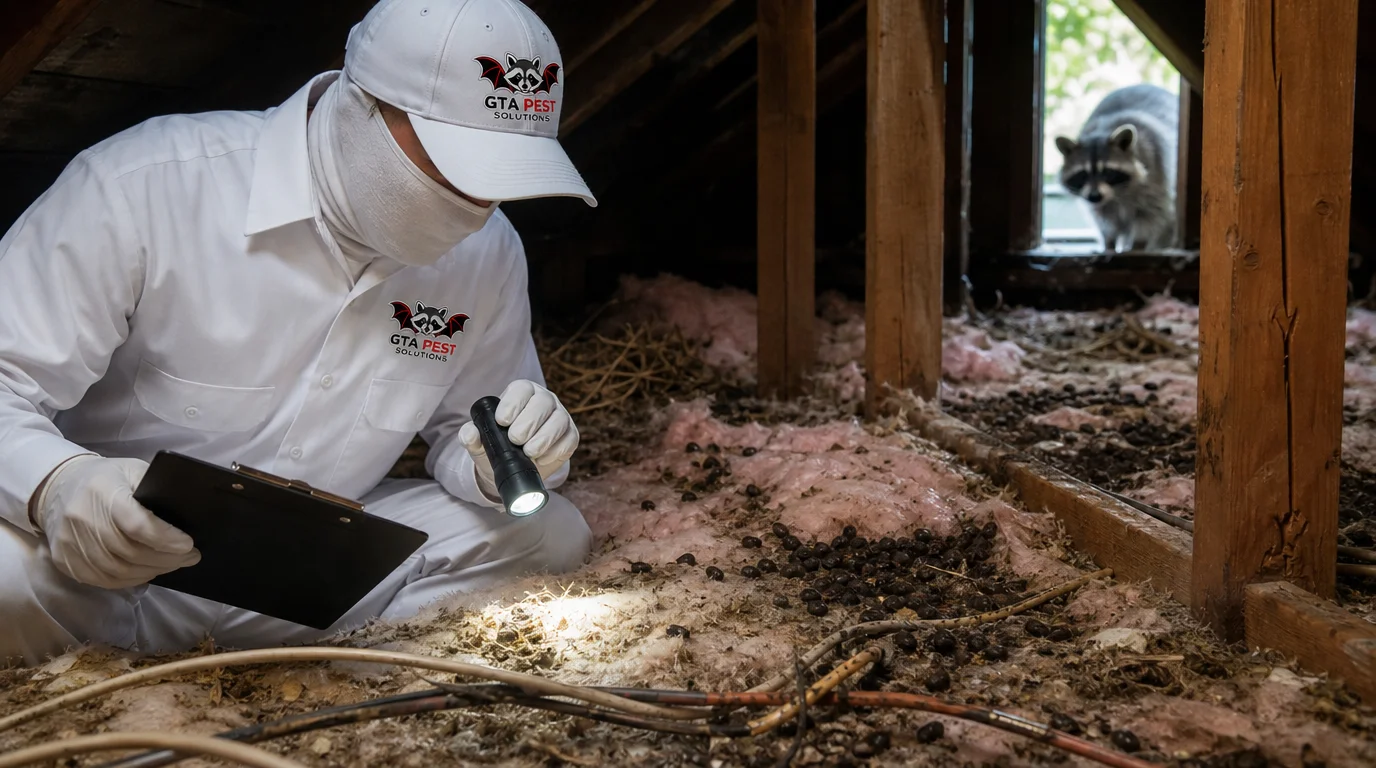
For more than 10 years, we’ve protected GTA attics, chimneys, and crawl spaces from wildlife looking for a warm place to nest. An animal in your home is more than noise. It damages insulation, chews wiring, and can bring parasites into your living space. Our job is to remove it humanely, seal the entry point, and hand your home back to you.

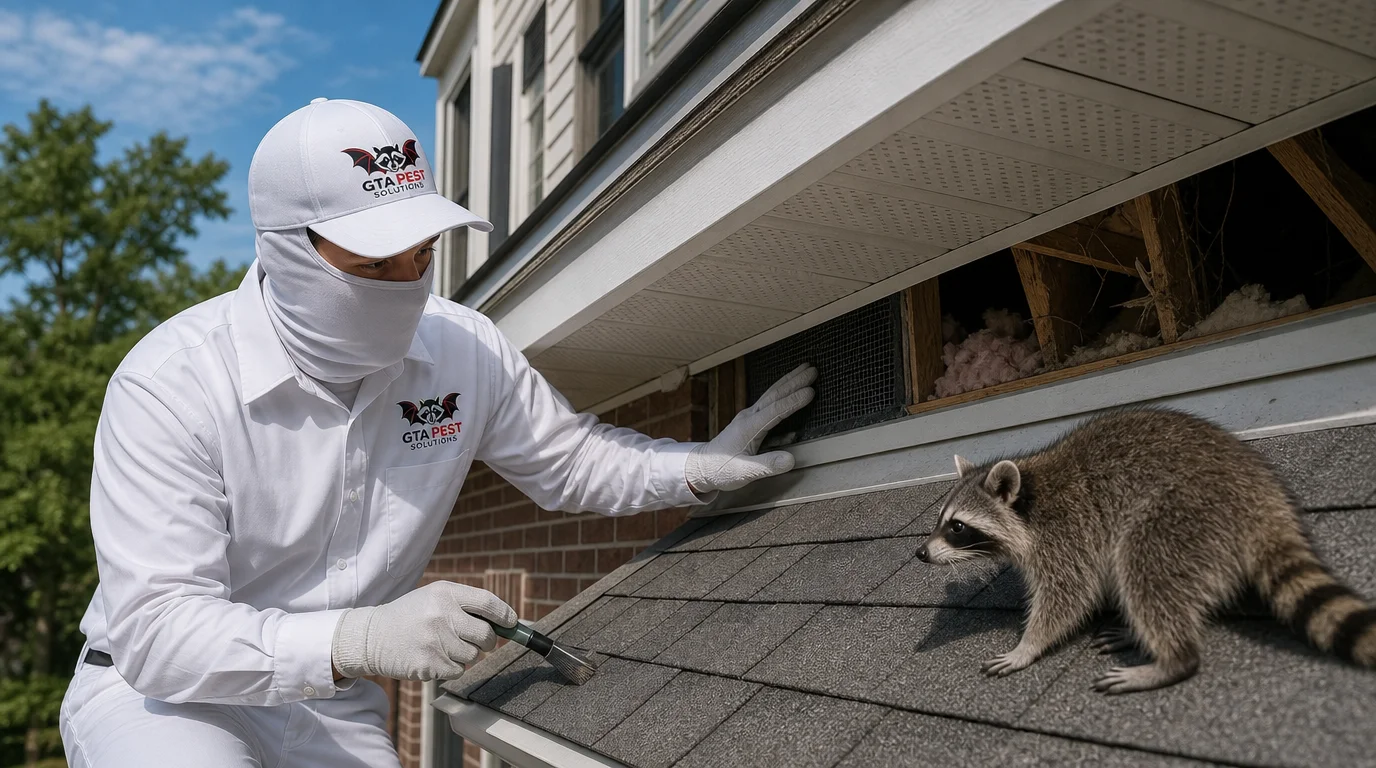
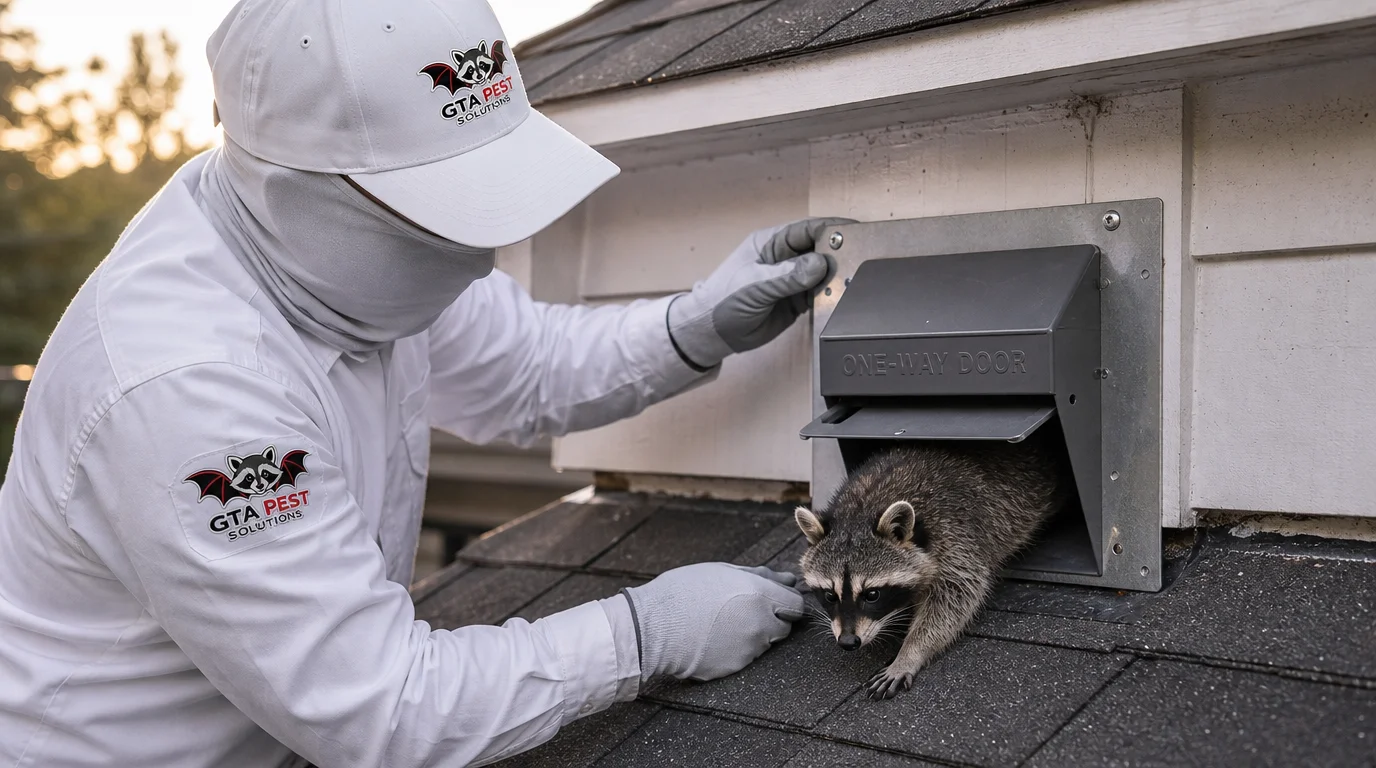
Every job follows the same exclusion-first method: locate every entry point, let the animal leave safely through a one-way door installation, then seal the property for good. We never trap-and-relocate over long distances. See real jobs we’ve completed in our Case Studies .

Hearing thumping in the attic at night?

Raccoon, Squirrel, Skunk, or Bird: What’s Actually in Your Attic

Every wildlife removal Toronto job starts with correctly identifying what you’re dealing with. Sound and timing usually give it away before we even arrive.

ComparisonRaccoonSquirrelSkunkBird
🕒 ActiveNocturnal with heavy movement after dark.Active during the day with quick, energetic movements.Dusk and nighttime; slow-moving.Daytime; frequent chirping and activity.
🔊 SoundHeavy thumping, rolling, and loud footsteps.Scratching, scampering, and chewing noises.Low shuffling and digging sounds.Fluttering wings, chirping, and nesting calls.
📍 Common SpotAttics, chimneys, and roof spaces.Attics, soffits, and rooflines.Under decks, sheds, and porches.Roof vents, soffits, eaves, and exhaust vents.
⚠ Main RiskExposure to roundworm parasites and rabies.Chewed electrical wiring and insulation damage.Defensive spraying and burrowing damage.Droppings, nesting debris, mites, and blocked vents.

For full species-specific detail, see our dedicated Raccoon Removal, Squirrel Removal, Skunk Removal, and Bird Control pages.

Not sure which animal you have?

The 1-Kilometre Law: Why We Don’t Just Trap and Drive Away

Most homeowners are surprised to learn trapping isn’t the quick fix it sounds like. Ontario regulations under the Ontario Fish and Wildlife Conservation Act restrict relocation to within one kilometre of the capture site, generally within 24 hours.

A raccoon released one kilometre away simply walks home. It has strong homing instincts and knows its own territory far better than a new one. Longer relocations also spread disease between wildlife populations rather than solving anything.

This is the real reason one-way door installation has become the standard in Ontario. It doesn’t fight biology. The animal leaves to feed, the door swings one direction, and it can’t get back to a den that no longer exists.

Considered trapping it yourself?

Baby Season Changes the Entire Plan

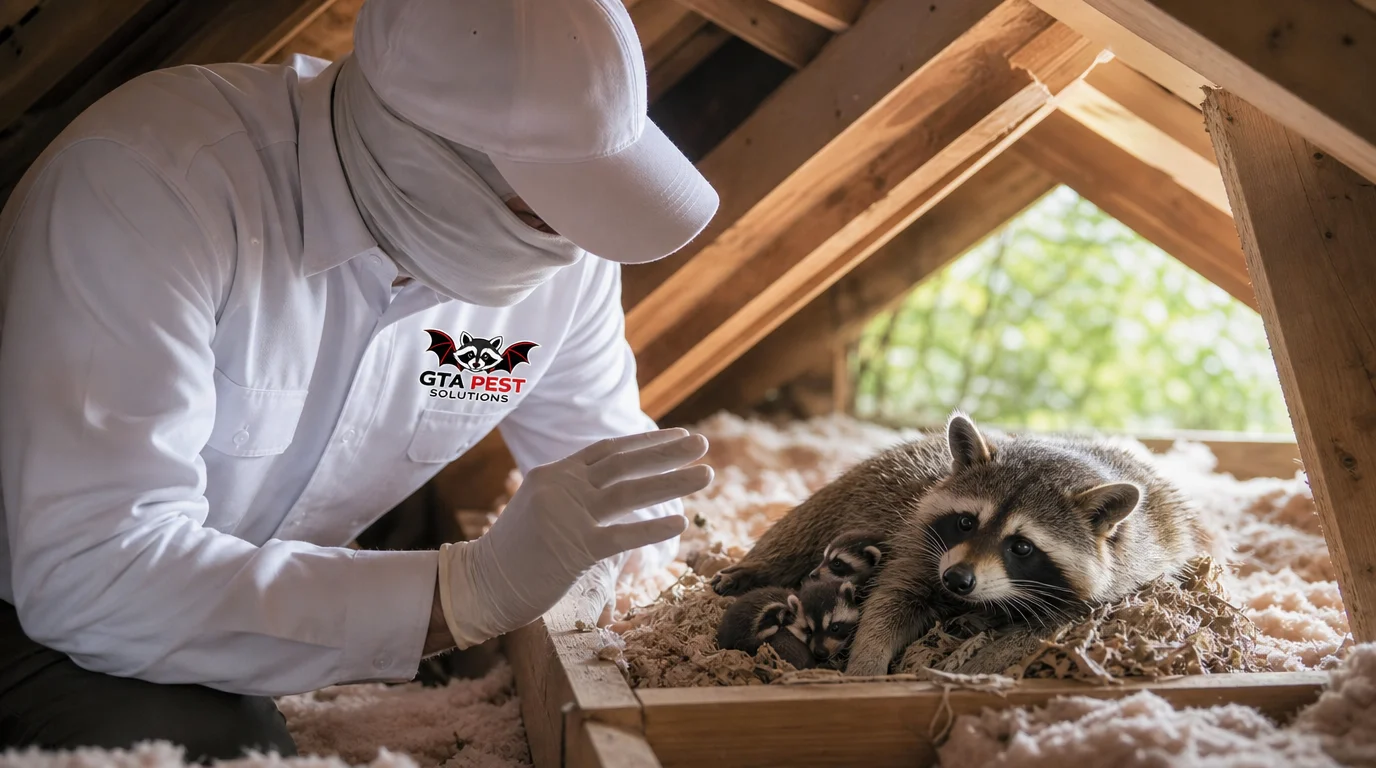
Installing a one-way door on a den with young inside separates a mother from babies who can’t yet survive without her. It’s not just inhumane. It typically violates the intent of provincial wildlife rules and often ends with animals dying in a wall void, creating a far worse problem.

When young are present, our technicians confirm it during inspection and switch to baby reunion instead. Young are safely removed, kept warm, and reunited with the mother once she’s excluded, so the whole family relocates together rather than being split apart.

Peak GTA baby season runs March through August, with raccoons typically denning earliest in spring and squirrels having a second litter in late summer.

Hearing chattering or crying sounds?

Signs You Have Wildlife, Not Just an Old House Settling

  • Heavy thumping or rolling sounds at night, usually raccoons moving around an attic.
  • Fast scratching or scampering during the day, typically squirrels, which are active in daylight.
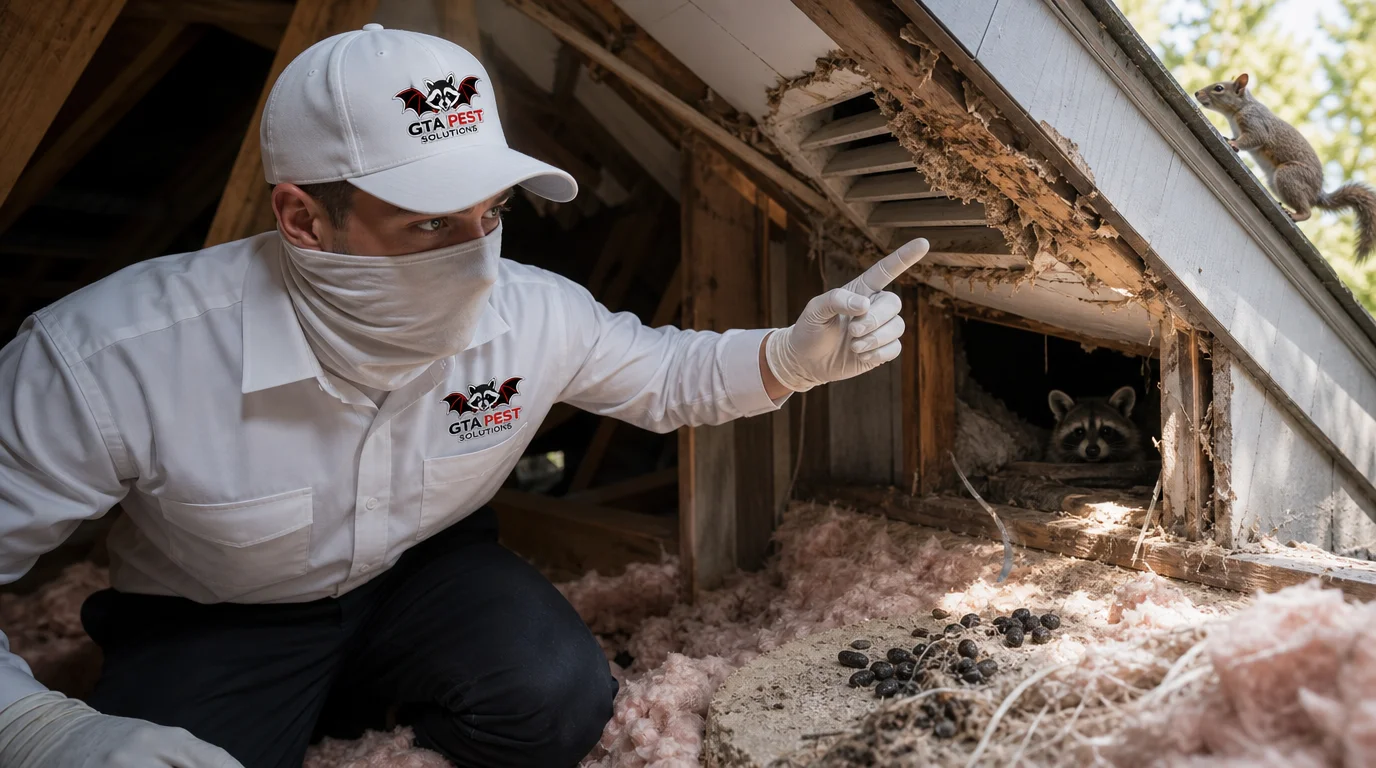
  • A strong, persistent ammonia smell from urine buildup, especially over an attic latrine site.
  • Visible damage to soffits, fascia, or roof vents, the most common entry points.
  • Chattering or crying sounds, especially in spring, often a sign of young in a den.

Do two or more of these sound familiar?

What Wildlife in Your Attic Actually Puts at Risk

Every wildlife removal Toronto case we take on starts with a health and safety check, not just an eviction. Untreated attic wildlife removal cases carry more than noise complaints.

Raccoon droppings can contain Baylisascaris procyonis (raccoon roundworm), a parasite whose eggs can survive in soil and insulation for years. In exceptional cases, it can cause a serious neurological disorder if ingested or inhaled. Raccoons and skunks can also carry rabies, and raccoon urine may carry leptospirosis.

Property risk is just as real. Squirrels chew wiring, which is a genuine fire hazard. A season of raccoon activity can leave insulation compacted, torn, and contaminated well beyond what a simple cleanup addresses. This is why attic restoration is sometimes part of the job, not an upsell.

Found a latrine or heavy urine smell?

Where Wildlife Actually Gets In, By Property Type

The entry point usually matches the building, not the animal.

Detached and semi-detached houses

Roof-soffit junctions, damaged fascia, and chimneys without caps are the most common access points across older Toronto, Scarborough, and Etobicoke homes.

Townhouses and row homes

Attic spaces are sometimes continuous between units, so one entry point can affect an entire row.

Sheds, decks, and porches

Common skunk and groundhog denning sites, especially where a gap exists at ground level.

Commercial and multi-unit buildings

 Rooftop mechanical units and loading areas attract birds and raccoons alike. See our Commercial Pest Control  programs for building-wide work.

Our Four-Step Wildlife Removal Process

Every wildlife removal Toronto job we run follows the same four steps:

Inspect:

We identify the species, locate every entry point, and check specifically for young before deciding on a method.

Exclude

A one-way door installation lets the animal leave on its own; where babies are present, we reunite the family instead.

Remediate

Contaminated insulation is removed, and the space is treated, with full attic restoration available where damage warrants it.

Prevent

Every entry point is sealed with animal-proof materials so the same property doesn’t become a repeat call.

Ready to start with a proper inspection?

A GTA Wildlife Season Calendar

Wildlife pressure in the GTA follows a predictable annual pattern, and timing affects which method is legally and practically appropriate.

SeasonWhat Becomes ActiveWhat to Watch For
🌸 Spring (Mar–May)Raccoons denning and early squirrel litters become active.Chattering sounds and mother animals searching for attic entry points.
☀ Summer (Jun–Aug)Skunks denning beneath decks and birds nesting around homes.Spray odours, fluttering sounds in vents, soffits, and roof spaces.
🍂 Fall (Sep–Nov)Squirrels actively seek warm shelter for the winter.Sudden scratching and scampering as wildlife moves indoors.
❄ Winter (Dec–Feb)Established attic populations remain sheltered with less outdoor movement.Consistent thumping and movement overhead as animals stay warm inside.

Fall is the highest-volume season for calls, since squirrels and raccoons both move toward shelter as temperatures drop.

Matches what you’re hearing right now?

Is DIY Wildlife Removal Even Legal?

Mostly, no, and this surprises people. In Ontario, capturing, relocating, or killing wildlife generally requires humane removal methods and, in most cases, a licence. Homeowners can legally exclude an empty den, sealing a hole once they’re certain nothing is inside. Trapping and relocating an animal yourself is a different matter and risks violating provincial rules.

Legal DIY

sealing an entry point you’re certain is empty, cleaning up minor droppings with gloves and a mask.

Not legal or not advisable

trapping and relocating an animal yourself, sealing an entry point without confirming young aren’t trapped inside.

Call a professional when

you hear ongoing activity, suspect young are present, or you’re not certain the den is empty.

Thought about handling it yourself?

What GTA Homeowners Say

For over 10+ years, GTA Pest Solutions has handled wildlife removal Toronto calls ranging from a single squirrel to full attic restorations across the region. Guarantee terms, licensing details, and past customer feedback are documented on our Guarantee , Licensing & Certifications , and Reviews  pages.

Where We Work Across the GTA

We deliver business pest control GTA-wide across:

Response times vary across the GTA; central Toronto and the inner suburbs are typically fastest, outer Durham and Halton take longer, and peak summer weekends stretch everything. We’ll give you an honest window when you call. See all areas we serve.

Signs You Have Wildlife, Not Just an Old House Settling

  • An animal in your attic is stressful enough without wondering if the company you called is even doing it right. Here’s why GTA families choose our humane wildlife removal GTA team first:

    • Licensed under Ontario regulations: every technician operates within MNRF wildlife rules, never guesswork.
    • Exclusion first, always: we solve the entry point, not just remove today’s animal.
    • Babies are reunited, not orphaned: we follow provincial requirements on this without exception.
    • Full attic restoration available: damaged insulation and contaminated areas get properly remediated.
    • Guaranteed exclusion work: if an animal gets back in through a point we sealed, we return at no charge.

Key Takeaways

Ready to solve it properly?

Get Your Free Home Pest Inspection

A licensed technician will identify the pest, show you where it’s getting in, and give you a firm price, with no obligation.

    Get Your Quote

    Pest Control In Toronto

    Frequently asked questions

    Cost depends on the species, entry points found, and whether attic restoration is needed. We quote a firm price after a free inspection rather than an estimate over the phone.

    Not legally, in most cases. Ontario restricts relocation to within one kilometre of capture, and trapping wildlife without a licence generally isn’t permitted. A released raccoon that close will likely return anyway.

    They’re never separated from the mother if we can help it. Under the Ontario Fish and Wildlife Conservation Act, we confirm whether young are present and reunite the family before excluding the den.

    In almost every case, yes, provided every entry point is found and sealed with proper materials. A missed second entry point is the most common reason animals return.

    Yes. Attic restoration is available for contaminated or damaged insulation once the wildlife side of the job is complete.

    Usually, yes. Our animal removal services Toronto team covers Toronto, Brampton, Mississauga and the entire GTA, typically with next-day availability.

    Yes. Rooftop units, loading docks, and multi-unit buildings are common candidates. See our Commercial Pest Control  page for building-wide programs.

    Take the First Step Toward a Pest-Free Commercial Property

    Whether you’re dealing with rodents, bed bugs, cockroaches, wasps, or wildlife, our licensed technicians are ready to help with fast, effective, and guaranteed pest control across the GTA.