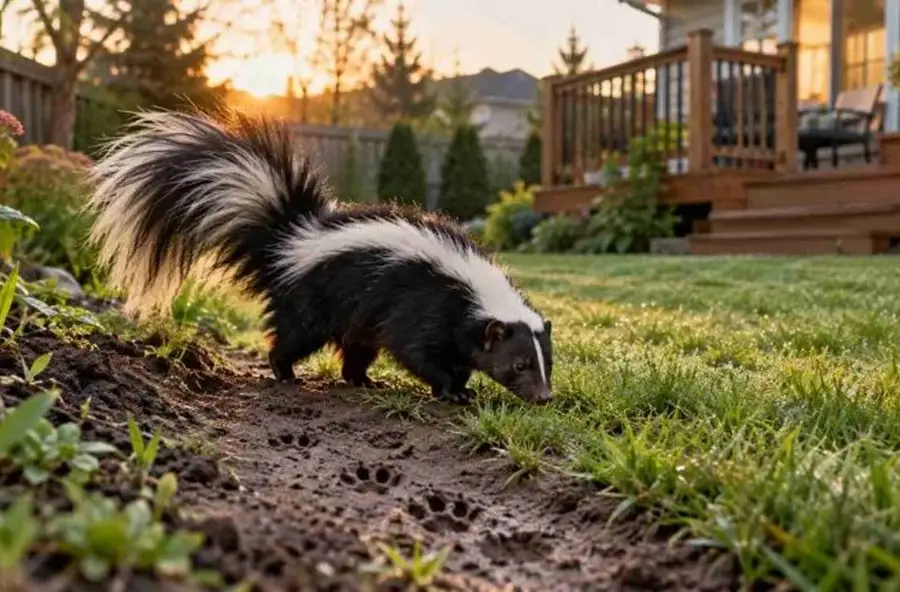
Found unusual footprints in your yard and wondered if a skunk has been visiting your property? Skunk tracks usually show five toes, visible claw marks, and a distinctive front-and-rear footprint pattern, though they’re sometimes confused with tracks from cats, raccoons, and other wildlife. Toe count, claw marks, track size, and nearby signs of activity can help you tell them apart. If you’re in Toronto or the Greater Toronto Area, identifying skunk footprints is a useful first step whenever you notice unexplained digging, holes, or wildlife activity around your home. If the signs point to an active skunk problem rather than a one-off visitor, our Skunk Removal Services in Toronto and the GTA page covers what a professional inspection and humane removal looks like.
| Mini summary: Skunk tracks typically show five toes, prominent claw marks, and a rectangular heel pad on the hind foot. Multiple clues together give a more reliable identification than one footprint alone. |
What Do Skunk Tracks Look Like?
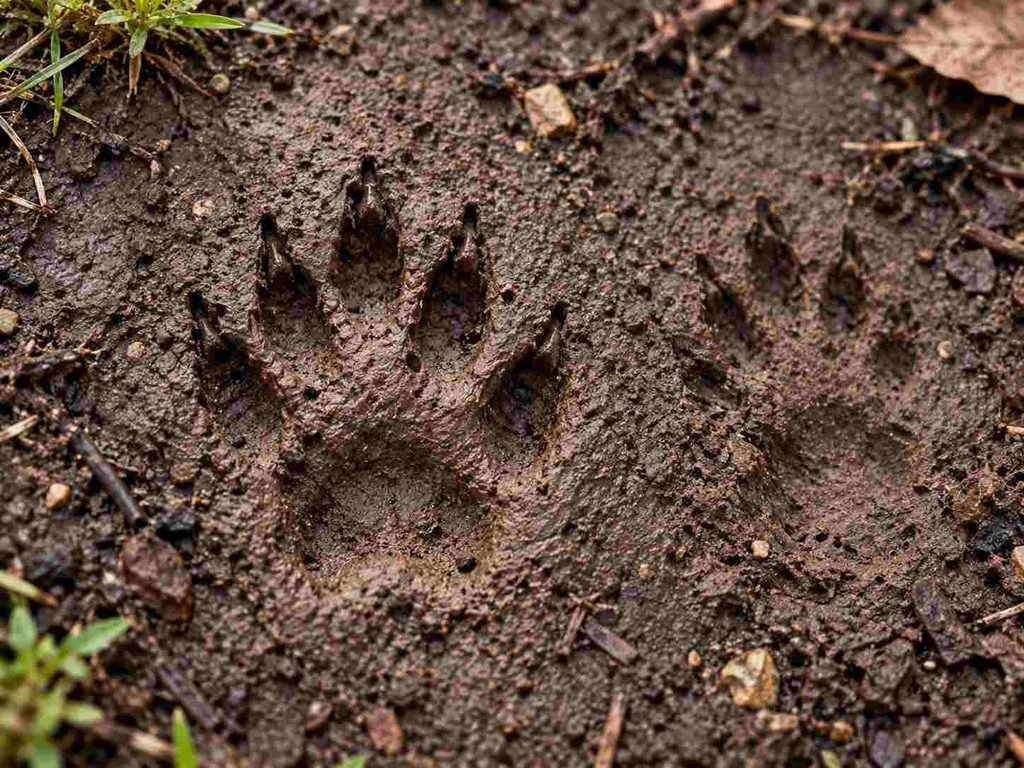
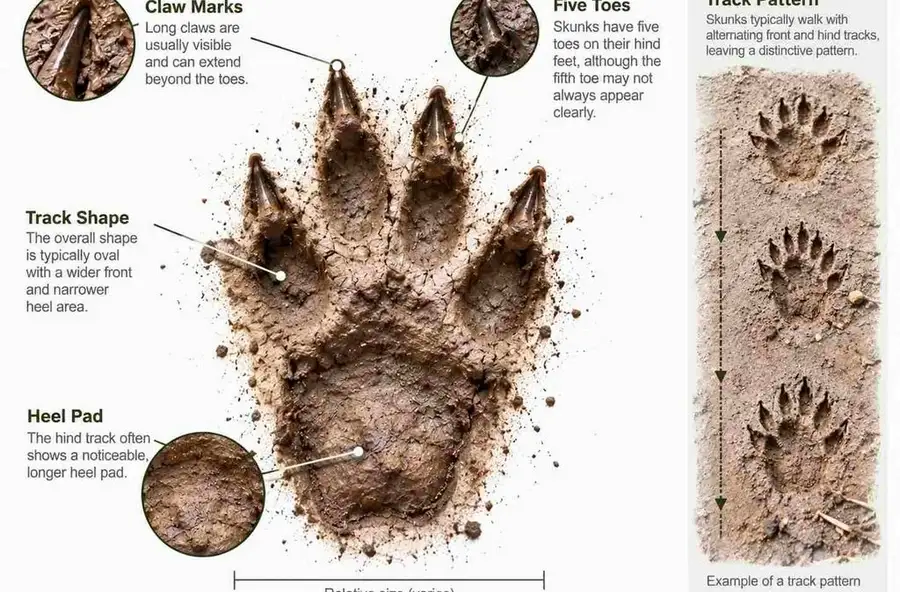
Skunk tracks are relatively small compared with the tracks of larger wildlife. A typical skunk has five toes on both its front and hind feet, although the fifth toe doesn’t always show clearly in every impression, according to the Pennsylvania Game Commission’s wildlife damage guidance.
Long claws are also commonly visible. Skunks use their strong front claws for digging, so claw impressions are an important clue when identifying a footprint. According to the National Wildlife Federation’s species profile on striped skunks, the striped skunk’s front claws are noticeably longer than its rear claws, which is exactly why front tracks often show deeper, more defined claw marks than hind tracks.
Skunk tracks measure roughly 1½ inches long by 1¼ inches wide, though the exact size varies by individual animal and by surface. Mud, soft soil, sand, snow, grass, and compact ground can all change how a print looks.
What Do Skunk Front Tracks Look Like?
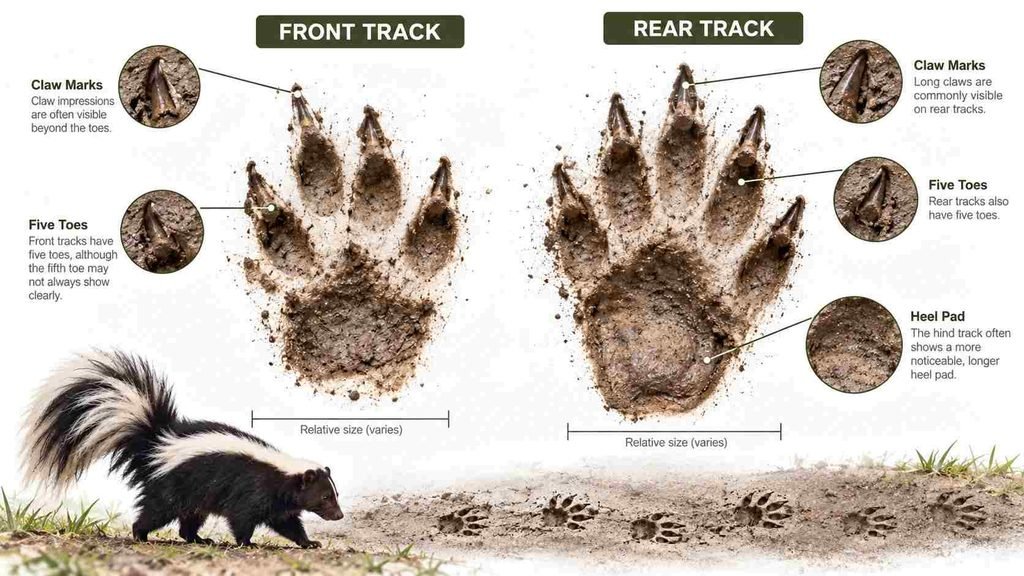
A skunk’s front foot has five toes, each typically showing a claw mark, since the front claws are the longer, more digging-adapted pair. Not every track will show all five toes clearly. On hard or uneven ground, some toes may leave weaker impressions, which is why examining several tracks together gives a more reliable read than judging from a single unclear footprint.
What Do Skunk Rear Tracks Look Like?
The hind foot also has five toes and tends to leave a more obvious heel-pad impression. This heel pad is one of the more useful skunk track identification features: it typically appears long and rectangular, a shape that’s less common among the other backyard wildlife found across Ontario. Because front and rear footprints can look quite different, examining a complete sequence of tracks provides more information than assessing one isolated print.
How to Identify Skunk Tracks (5-Step Method)
If you find animal tracks around your home, use several clues together rather than relying on any single feature.
1. Count the Toes
Start by looking for five toes on each foot, front and hind. The fifth toe can be difficult to see in a shallow or damaged impression, so don’t rule out a skunk if you can only make out four clear toe marks.
2. Look for Claw Marks
Skunk claw marks can extend visibly beyond the toe pads because skunks have long, curved claws suited for digging, which is one reason tracks often appear near areas of disturbed soil. When comparing tracks, toe arrangement and claw impressions should be read together, not in isolation.
3. Examine the Heel Pad
Look closely at the back portion of the footprint. On the hind track, a relatively long, rectangular heel pad is one of the clearer features that can help separate a skunk print from other small-mammal tracks in the same yard.
4. Compare Several Tracks
A single footprint can be misleading. Looking for a sequence of prints and comparing the front and hind tracks together gives you a better sense of the animal’s size, gait, and direction of travel.
5. Look at the Surrounding Area
The most reliable skunk tracks identification combines the footprint itself with other evidence nearby. Repeated tracks next to small holes in the lawn, disturbed soil, or a possible den entrance add meaningful context that a footprint alone can’t provide.
| Mini summary: Use the five clues together: toe count, claw marks, heel-pad shape, a sequence of multiple tracks, and nearby signs like digging or a den. No single feature is conclusive on its own. |
Skunk Track Identification: Key Features to Look For
| Feature | What to Look For |
|---|---|
| Toes | Five toes on front and hind feet |
| Claws | Long claw marks, often visible beyond the toe pads |
| Heel pad | Long, rectangular shape, more noticeable on the hind track |
| Track size | Roughly 1½” long x 1¼” wide; varies by surface |
| Front vs. rear tracks | Can differ noticeably in shape and clarity |
| Track pattern | Compare several footprints in sequence |
| Other signs | Digging, holes, droppings, or a possible den nearby |
No single feature should be used on its own. Weather, soil conditions, the animal’s movement, and the quality of the impression can all affect how a skunk print looks in practice.
Skunk Tracks vs. Other Animal Tracks
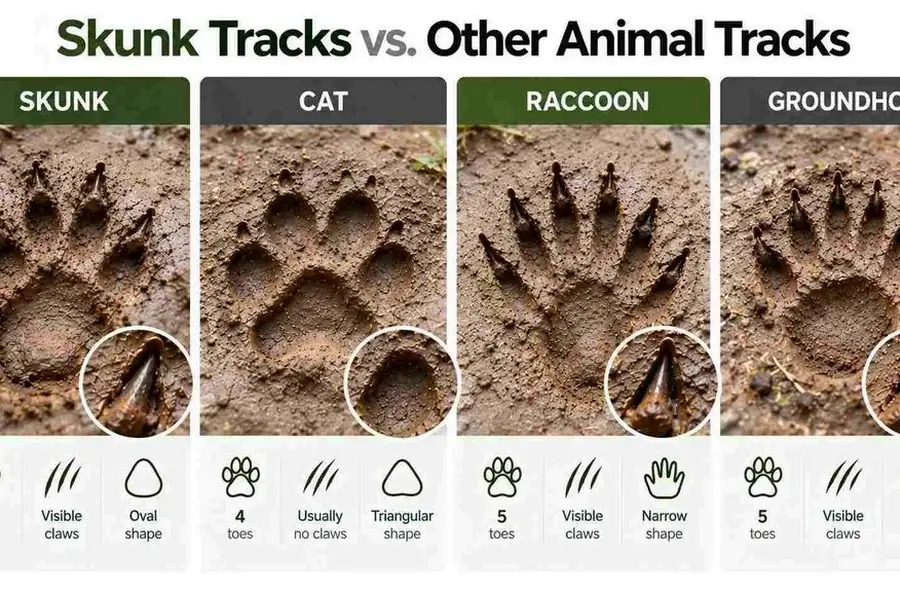
One of the biggest challenges in wildlife track identification is that different species can leave similar-looking prints in the same soil or snow. Looking at toe count, claws, heel-pad shape, and the overall track pattern together helps narrow down the possibilities.
Skunk Tracks vs. Cat Tracks
When comparing skunk tracks vs. cat tracks, start with the toe count. Skunks show five toes on front and hind feet, while domestic cats typically leave four visible toes because their fifth toe (the dewclaw) sits too high to touch the ground. Claw marks are the second giveaway: cats generally keep their claws retracted while walking, while skunks leave prominent claw impressions. A small print with five toes and visible claws points toward a skunk, though one unclear print shouldn’t be treated as conclusive on its own.
Skunk Tracks vs. Raccoon Tracks
Skunk tracks vs. raccoon tracks can be harder to tell apart because both animals have five toes. Raccoon prints tend to have a more hand-like appearance with long, finger-like toes, while skunk footprints are generally smaller with more prominent claw marks and a less spread-out toe arrangement. If tracks alone aren’t conclusive, other signs of activity should be weighed alongside them, since more than one species can cause similar-looking lawn or garden damage.
Skunk Tracks vs. Groundhog Tracks
Skunk tracks vs. groundhog tracks can also cause confusion around lawns and gardens. When comparing the two, look at toe arrangement, claw length, overall size, and the surrounding evidence. A suspected groundhog burrow entrance is a very different clue than the small, shallow digging holes typically associated with a skunk’s feeding activity. When the footprint itself is unclear, look for multiple tracks and additional evidence rather than relying on one impression.
Where You Might Find Skunk Tracks in the GTA
According to the City of Toronto’s guidance on skunks, skunks are active throughout the year, though they may become less active during extended cold spells. The City also notes that skunks are drawn to lawns and gardens, especially after rainfall, when grubs and larvae move closer to the surface and become easier to reach.
Common locations for skunk footprints include:
- Lawns and gardens
- Soft soil and mud
- Mulched garden beds
- Areas around sheds
- Spaces beneath decks or porches
- Freshly dug or disturbed ground
- Snow-covered surfaces
Skunk Tracks in Your Yard
If you find repeated skunk tracks in your yard, don’t focus only on the footprints themselves. Look around the area for small holes, disturbed soil, damaged sections of lawn, or sheltered spaces that could be sheltering a den. The City of Toronto explains that skunks may dig small, round holes and roll back sections of sod while searching for grubs and larvae, so a combination of tracks and lawn digging together tells a more complete story than either sign alone.
Skunk Tracks in Snow
Snow can make skunk tracks easier to spot because the footprint contrasts clearly with the surrounding surface. That said, melting, fresh snowfall, wind, and other animals crossing the same path can distort a track quickly. If you find skunk tracks in snow, look for a full sequence of footprints and examine the toes and claw marks closely before drawing a conclusion.
| Not sure if it’s a skunk or another backyard visitor? Browse our full https://gtapestsolutions.ca/pest-library/ |
Other Signs of Skunks Near Your Property
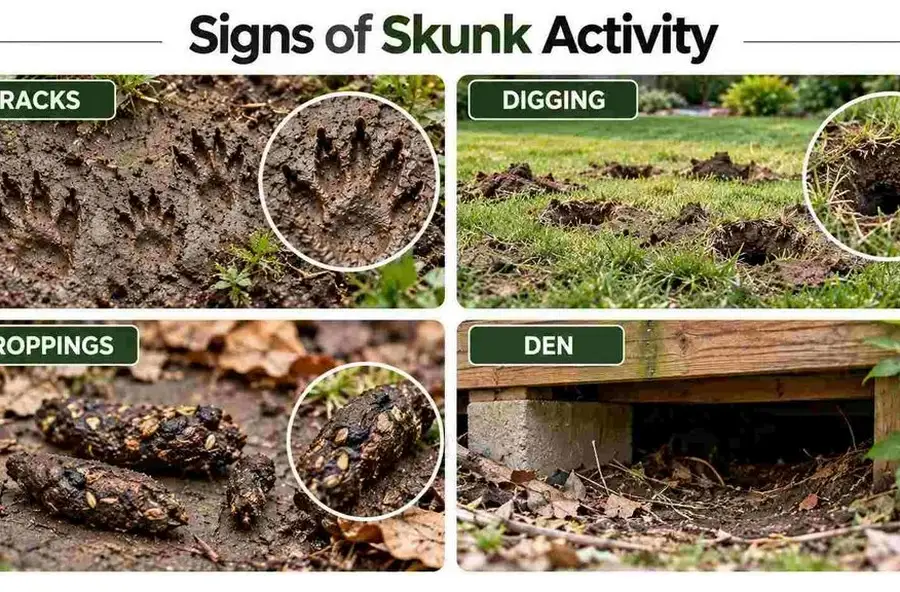
Footprints are only one part of skunk identification. If you suspect a skunk has been visiting your property, look for several signs together rather than relying on tracks alone.
Skunk Holes and Digging
Small, round holes in a lawn can indicate skunk digging. Skunks are omnivores that commonly search soil for insects and grubs, and the City of Toronto notes that skunks may dig small round holes and roll up sections of sod while feeding. This kind of lawn damage is one of the most common reasons GTA homeowners first suspect skunk activity on their property.
Skunk Droppings and Scat
Skunk droppings can offer another clue, often containing recognizable undigested insect parts, according to wildlife management resources from the Ontario Ministry of Natural Resources. Droppings can vary in appearance and resemble those of other small mammals, so for a reliable identification, compare scat alongside tracks, digging, and other signs rather than on its own.
Skunk Dens and Burrows
Skunks may use sheltered areas as dens, including spaces under porches, sheds, woodpiles, rocks, and debris, or old burrows dug by other animals. If you find skunk tracks leading toward a sheltered opening on your property, avoid disturbing the area until you know whether it’s actively being used. Our Wildlife Removal team can confirm den activity safely before any exclusion work begins.
Why Are Skunks Digging Holes in Your Lawn?
One of the most common reasons for skunk holes in yard areas is feeding activity. Skunks eat a varied diet that includes insects and grubs, and after rainfall these food sources move closer to the surface of the lawn, making them easier to reach. If you notice small holes together with five-toed footprints and visible claw marks nearby, the combination points more strongly toward skunk activity than any single sign on its own.
What Should You Do If You Find Skunk Tracks?
Finding a few skunk tracks doesn’t automatically mean a skunk is living on your property. Start by observing the area from a safe distance and look for repeated activity, including:
- Fresh digging
- Multiple sets of skunk footprints
- A possible den entrance
- Disturbed lawn or garden areas
- A lingering skunk odour
- Activity around sheds, decks, or porches
Avoid approaching or cornering a skunk. Urban wildlife can bite, scratch, or potentially carry disease, so keeping a safe distance is the right first move. If you suspect an animal is denning under a structure, don’t seal the opening right away. First confirm whether the space is actively being used and whether young are present, since sealing an active den can trap animals inside. Our Skunk Removal technicians handle this kind of inspection safely and humanely.
When Skunk Tracks May Indicate an Active Wildlife Problem
A single skunk footprint usually isn’t a reason for concern on its own. Repeated tracks combined with fresh digging, a possible den, or recurring nighttime activity are more meaningful together. For example, five-toed tracks appearing repeatedly around a lawn with fresh holes and disturbed soil suggest an active skunk is regularly visiting the property, not just passing through once.
Addressing the conditions that attracted the skunk, not just the animal itself, matters just as much. Removing one skunk without dealing with the food source or shelter that drew it in can simply create an opening for another skunk to move in. If the signs continue or an animal has taken shelter beneath your home, deck, shed, or porch, it’s worth having the situation professionally assessed.
| Seeing repeated skunk activity on your GTA property? Book a professional skunk inspection through our https://gtapestsolutions.ca/wildlife-removal/skunk-removal/ |
Frequently Asked Questions About Skunk Tracks
How can you tell if tracks are from a skunk?
Look for five toes, visible claw marks, and the characteristic rectangular heel pad on the hind track. Because individual footprints can be unclear, compare several tracks together and check for additional signs such as digging or droppings nearby.
What do skunk footprints look like?
Skunk footprints are relatively small and usually show five toes with visible claw marks. The hind track often shows a more noticeable, rectangular heel pad. Exact appearance varies with the surface and the quality of the impression.
How many toes does a skunk have?
A skunk has five toes on each foot, front and hind. The fifth toe doesn’t always show clearly in every track, so four visible toes shouldn’t automatically rule out a skunk.
Do skunk tracks show claws?
Yes. Skunk tracks commonly show prominent claw impressions, since skunks have long claws adapted for digging, especially on the front feet.
How big are skunk tracks?
Skunk tracks generally measure around 1 1⁄2 inches long by 1 1⁄4 inches wide, though size varies depending on the individual animal and the surface it’s walking on.
How can you tell skunk tracks from cat tracks?
Compare toe count and claws. Skunks show five toes per foot, while cats typically show four. Visible claw marks also point toward a skunk, since cats usually walk with their claws retracted.
What other signs indicate a skunk is nearby?
Look for repeated tracks, small holes in the lawn, disturbed soil, droppings, and possible denning areas beneath decks, porches, sheds, or woodpiles.
Do skunks leave tracks in snow?
Yes, skunk tracks are often easier to see in snow because of the contrast with the surface. However, melting and fresh snowfall can distort footprints quickly, so look for multiple tracks rather than relying on a single impression.
Conclusion
Identifying skunk tracks is easiest when you look at the complete picture rather than a single footprint. Five toes, visible claws, track size, the heel pad shape, and a full sequence of prints all work together, along with supporting evidence like digging, droppings, or a possible den. If you’re seeing repeated skunk activity around your Toronto or GTA property, identifying the animal correctly is the first step. Understanding why it’s using your property, and whether an active den is involved, is what determines the right next move. As a practical next step, start a simple log of when and where you spot tracks or digging. A few days of observation will tell you whether you’re dealing with a one-off visitor or an animal that’s settled in.
| Need help with an active skunk problem? Learn more about our https://gtapestsolutions.ca/wildlife-removal/skunk-removal/ |